
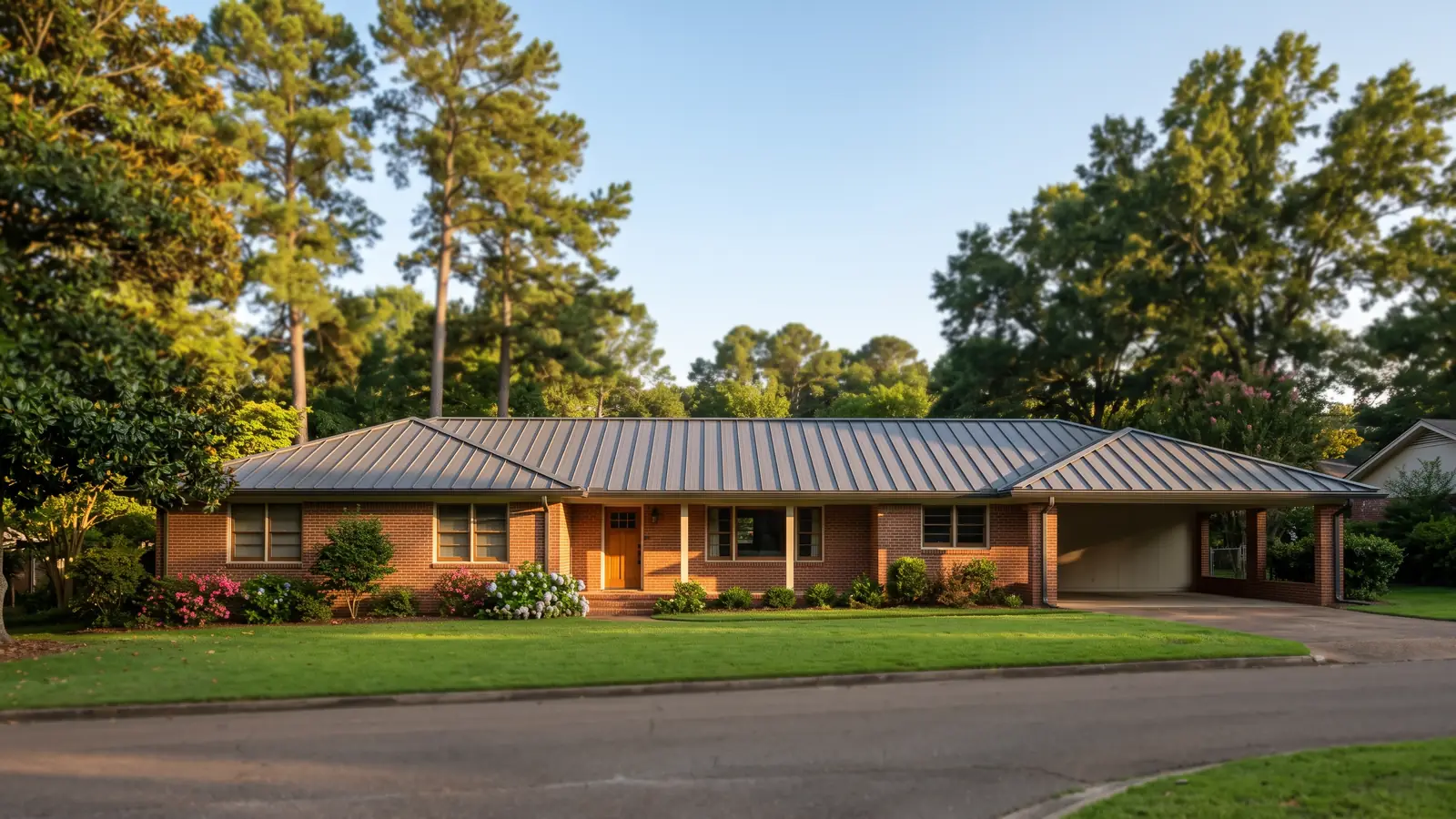
Stone-Coated Steel Roofing Styles: Shake, Tile, Shingle and Slate
Every stone-coated panel is stamped steel under stone chips. What changes from line to line is the shape of the stamp and how the panel fastens down.
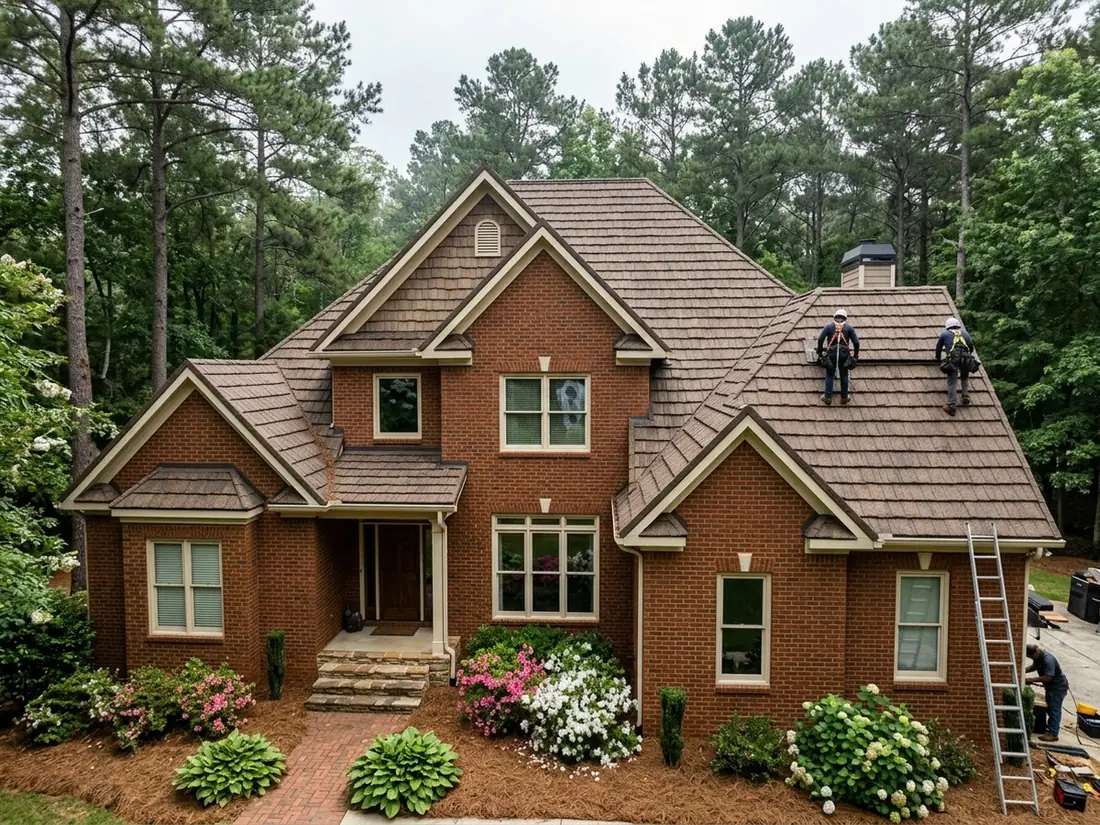
Shake-Look Panels
Shake panels are pressed with deep, uneven butts that read as hand-split cedar from the street. The granules carry the color, so a brown or weathered-gray blend can stand in for cedar without any wood on the roof. DECRA, which says it has made stone-coated panels since 1957, sells shake panels in two forms: one hung on battens and an "XD" version fastened directly to the deck.
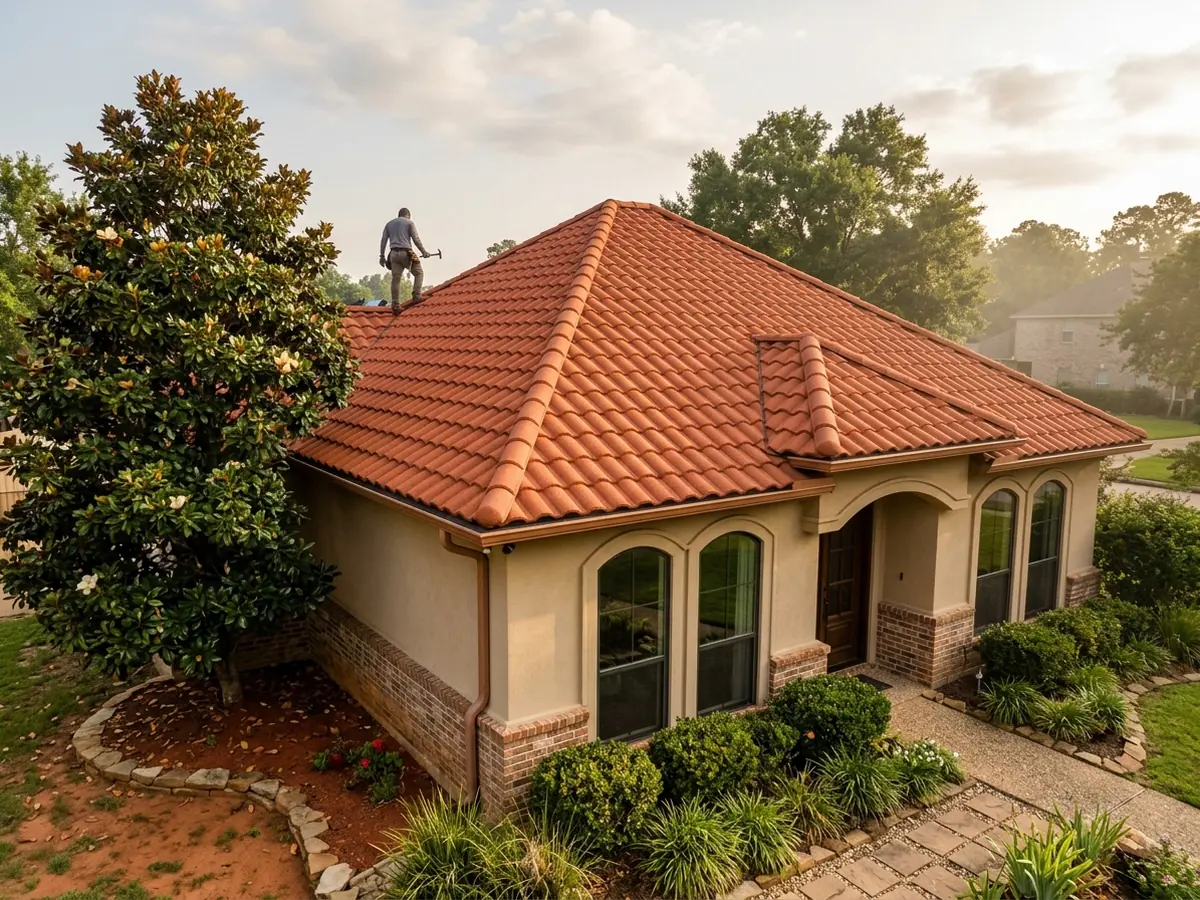
Spanish Barrel Tile Panels
Tile panels mimic Mediterranean or Spanish clay, with the rounded barrel rising and falling across each panel. DECRA's standard Tile line hangs on battens, while its Villa Tile line fastens direct to the deck, so the tile look doesn't lock you into one install method. Ask to see the hip and ridge trim on a sample before you choose, since it's what finishes every peak.
Shingle and Slate-Look Panels
Shingle panels copy a dimensional asphalt shingle, with staggered tabs and shadow lines. Some lines also press a flatter, stone-like shingle that reads as slate. These suit a ranch or split-level where a tile or shake look would feel out of place next to the neighbors' shingle roofs.
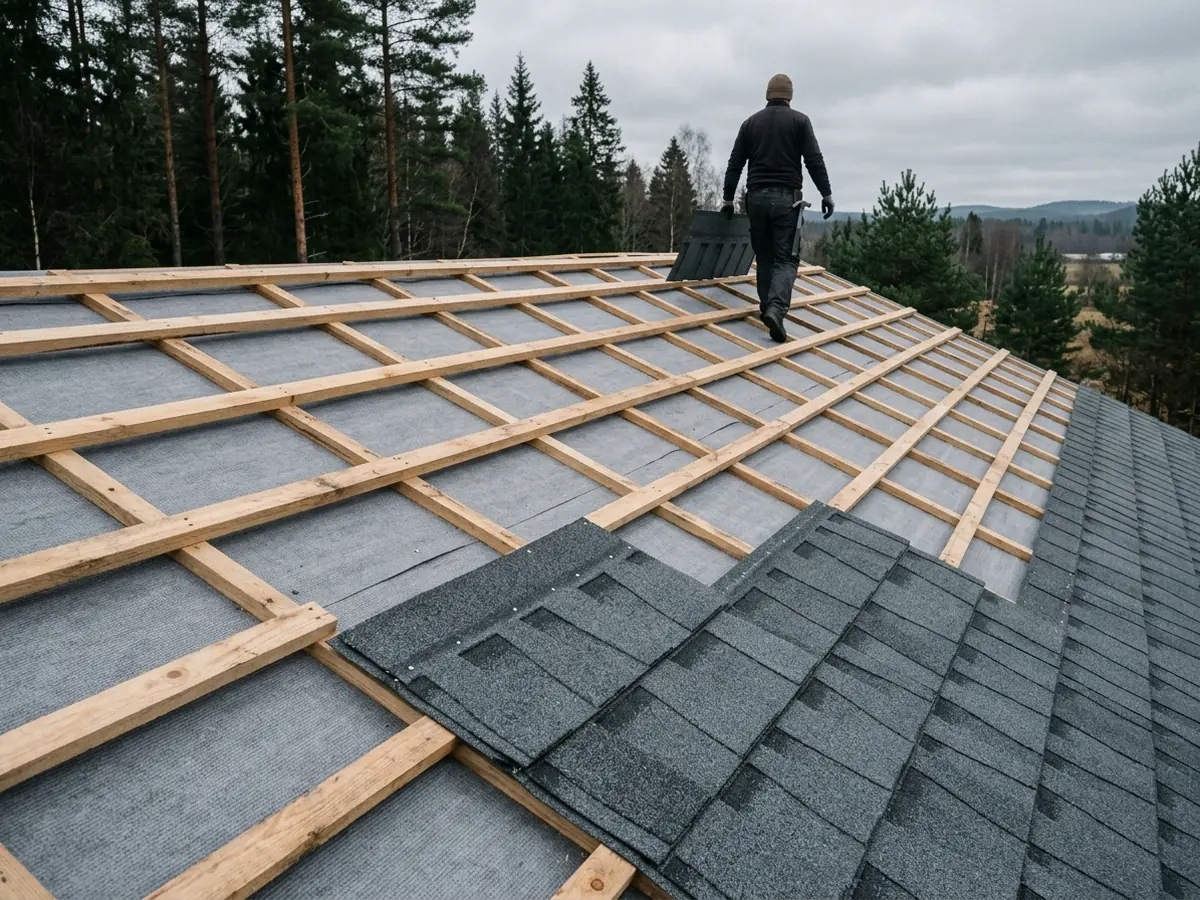
Battens or Nailed to the Deck
DECRA describes two installs. On battens, panels hang on a 2-foot by 2-foot grid of wood strips, which leaves a 1-1/2-inch continuous air space under the steel. The maker says that space lets hot air escape, and that battens are usually preferred when re-roofing over an old roof because the grid gives a level surface. Direct-to-deck panels nail to the sheathing and handle dormers, valleys and other cut-up roof shapes more easily. HomeGuide adds that batten installs typically cost more because of the extra labor and material.
Why Jackson homeowners call Jackson Metal Roofing Pros
- One independent metal roofer gets your request, not a call list
- A free measure, deck check and written estimate
- Ask for panel system, gauge and paint finish in writing
- The roofing permit is part of the scope: ask who pulls it
- No charge to the property owner for the referral
Stone-Coated Steel Roofing Layers, From Steel Core to Stone Chips
DECRA lists five manufacturing steps: stamping the steel blanks, applying a base coat, bonding the stone chips, adding a protective overglaze, and curing. Under the stone, the panel is steel coated to ASTM A792, the same aluminum-zinc spec as Galvalume, with acrylic resin on both sides. The granules are natural stone coated in pigment. That layer stack matters for two reasons:
Corrosion protection sits under the stone
The steel's alloy and acrylic coats are what keep it from rusting, and the stone sits on top. The alloy coating itself is explained on Galvalume metal roof.Color comes from the granules
The pigment is on the stone chips, so a matching repair panel has to come from the same line and color. Ask for a few spares to keep.
Stone-Coated Steel Roofing Price Range
HomeGuide's national guide puts stone-coated steel at $7 to $13 per square foot installed, or $700 to $1,300 per square, and lists DECRA at $8 to $14 per square foot. The same guide puts asphalt shingles at $3 to $5. The overall metal roof range and Jackson's permit rules are on metal roof installation.
What moves a stone-coated bid:
Battens or direct-to-deck
The batten grid adds lumber and labor.Tear-off or roof-over
Whether the old shingles can stay is a code question, covered on metal roof over shingles.Roof shape
Hips, valleys, dormers and chimneys need trim pieces cut and fitted by hand.
Stone-Coated Steel Roofing Through Hail Season and Summer
Hinds County gets hail most years, and the records are on metal roof hail damage. DECRA's published warranty language covers hail damage from stones up to 2.5 inches and wind uplift up to 120 mph. Those are the manufacturer's terms, and DECRA asks owners to register the roof. They aren't something this site or the roofer offers. Hail ratings for a specific product (UL 2218 Class 4 and the rest) are explained on FORTIFIED roof. Ask for the rating sheet for the exact panel being quoted.
For summer heat, a batten install's air space is the maker's answer to heat, and in a city with long stretches of 90°F days it's worth asking whether your roof shape allows it.
Stone-Coated Steel Roofing Questions for the Roofer
Which line and profile?
Brand, product name and color, not just "stone-coated shake".Battens or direct-to-deck?
And if battens, what's under them: the old shingles or new underlayment?Gauge?
26 or 28.Which warranty, from whom?
The manufacturer's published terms in writing, plus whether the installer has to register the roof for them to apply.Spare panels?
A few left behind in your color for future repairs.