
Metal Shingles: The Looks They Come In and the Metal Underneath
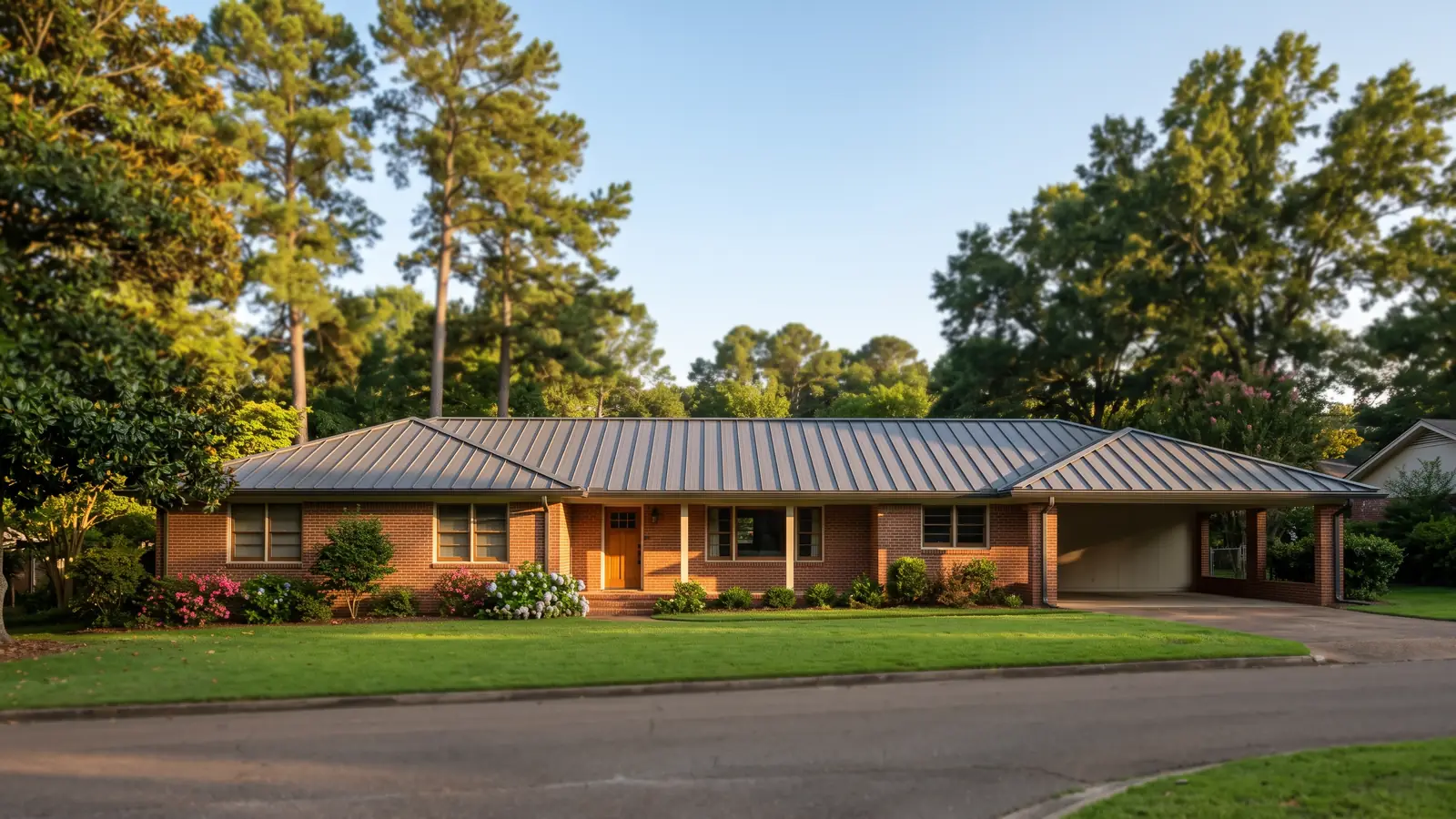
HomeGuide describes metal shingles as interlocking or overlapping pieces made to look like asphalt, wood shake, tile or slate. The stamping die sets the look. What the shingle is made of, steel or aluminum, decides how it handles dents and heat.
Dimensional Asphalt-Look Steel Shingles
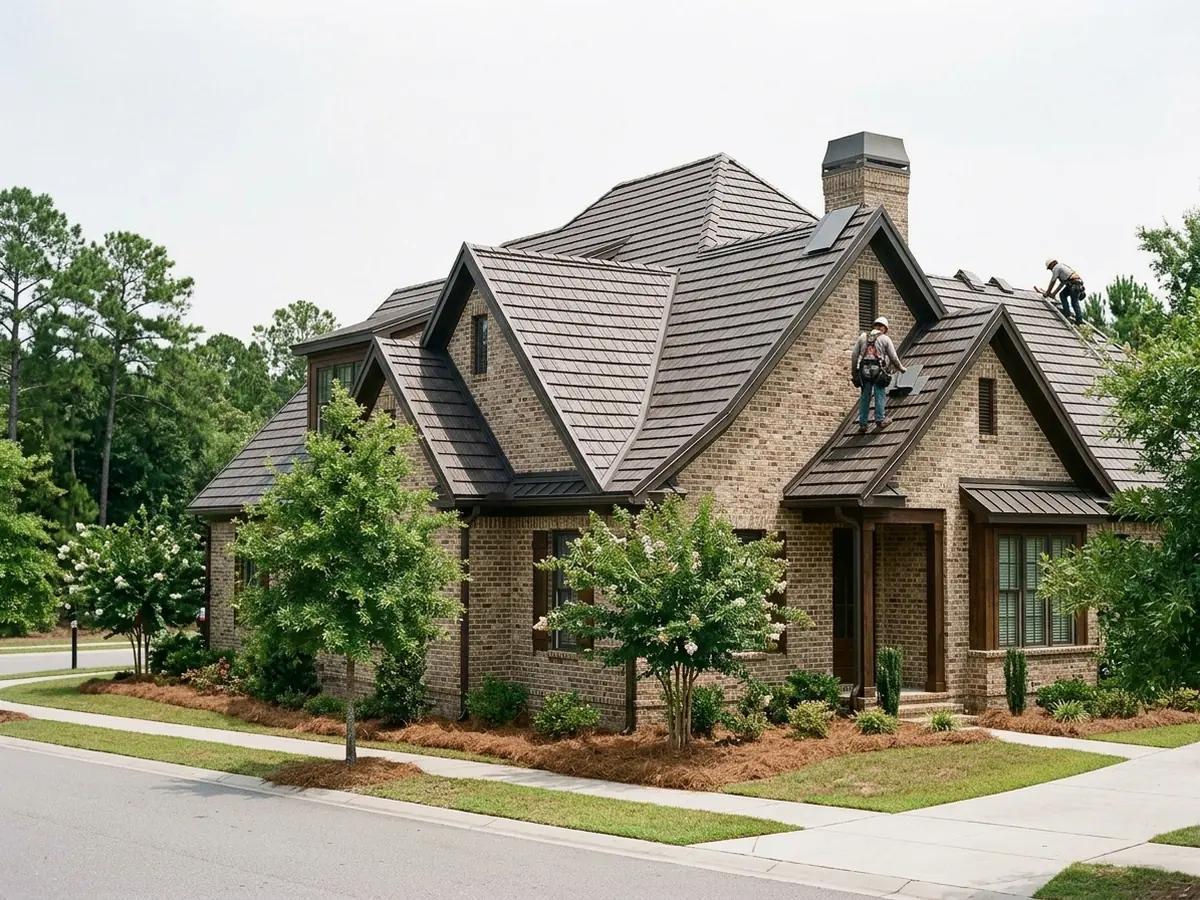
These copy an architectural asphalt shingle: staggered tabs, shadow lines pressed into each piece, and a mottled paint finish that breaks up the pattern. From the street, the shadow lines do most of the work. That makes them the easy choice on a street of shingled houses, or where an HOA covenant names the look but not the material. Up close, the edges are crisp metal, and each piece hooks into the course below, so there's no loose tab edge like on asphalt.
Slate-Style Metal Shingles
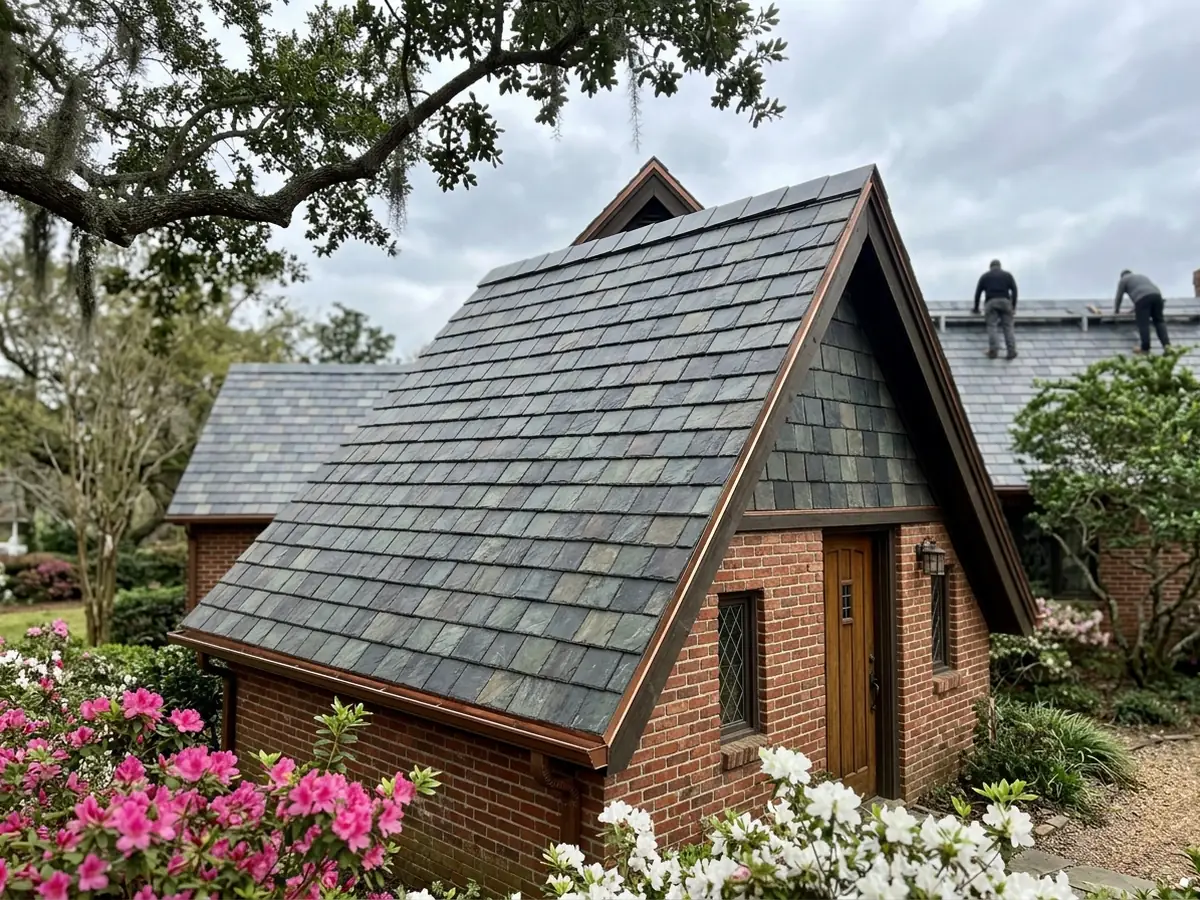
Slate-style pieces are flat, with straight or slightly chiseled bottom edges and color that varies from piece to piece in charcoal, grey-green or black. They suit steep gables, Tudor and cottage entries, and older brick houses where natural slate would be the period roof. Stamped metal gets the slate look on houses where natural slate isn't an option. Ask to see a sample board in daylight. Cheap slate patterns can look flat and repetitive across a big roof.
Cedar Shake-Style Metal Shingles
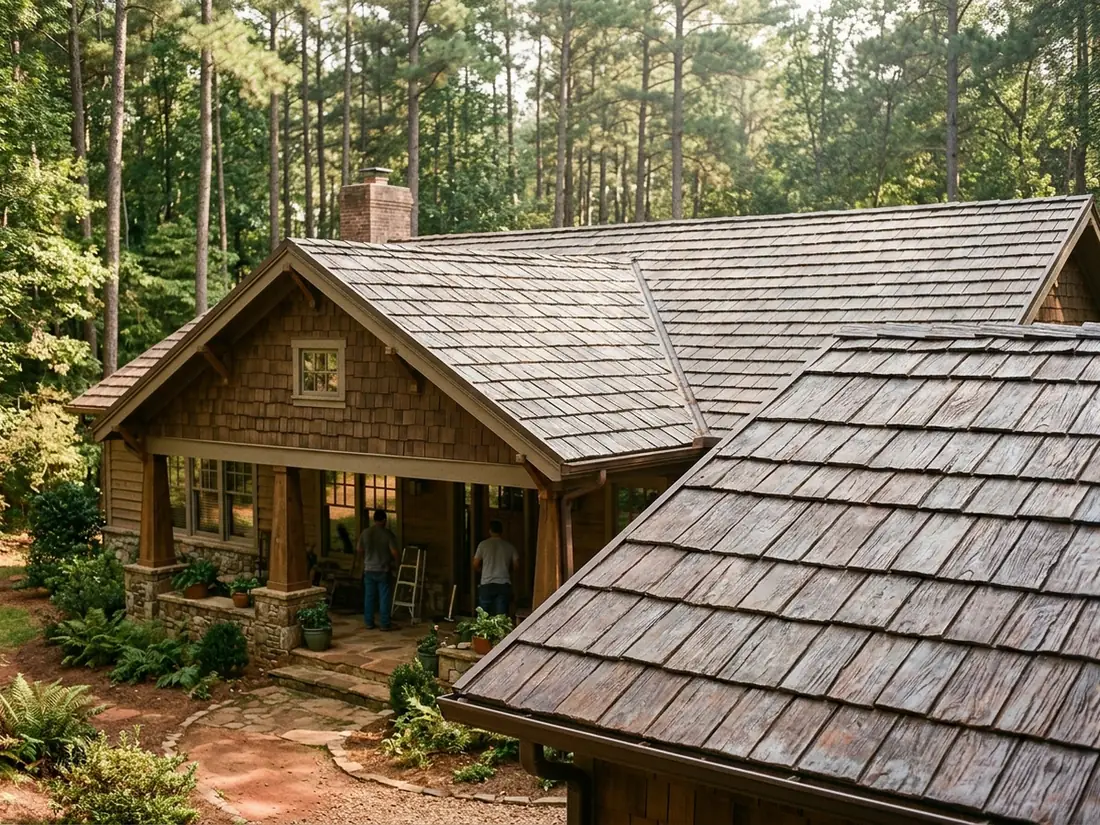
Shake patterns are embossed with wood grain and have uneven butt edges, usually in browns and weathered greys. They fit craftsman bungalows and wooded lots where a real cedar roof would look at home. HomeGuide notes that decorative and two-tone shingles cost more than standard colors. Stone-coated steel is the granule-faced cousin of this style and has its own page: stone-coated steel roofing.
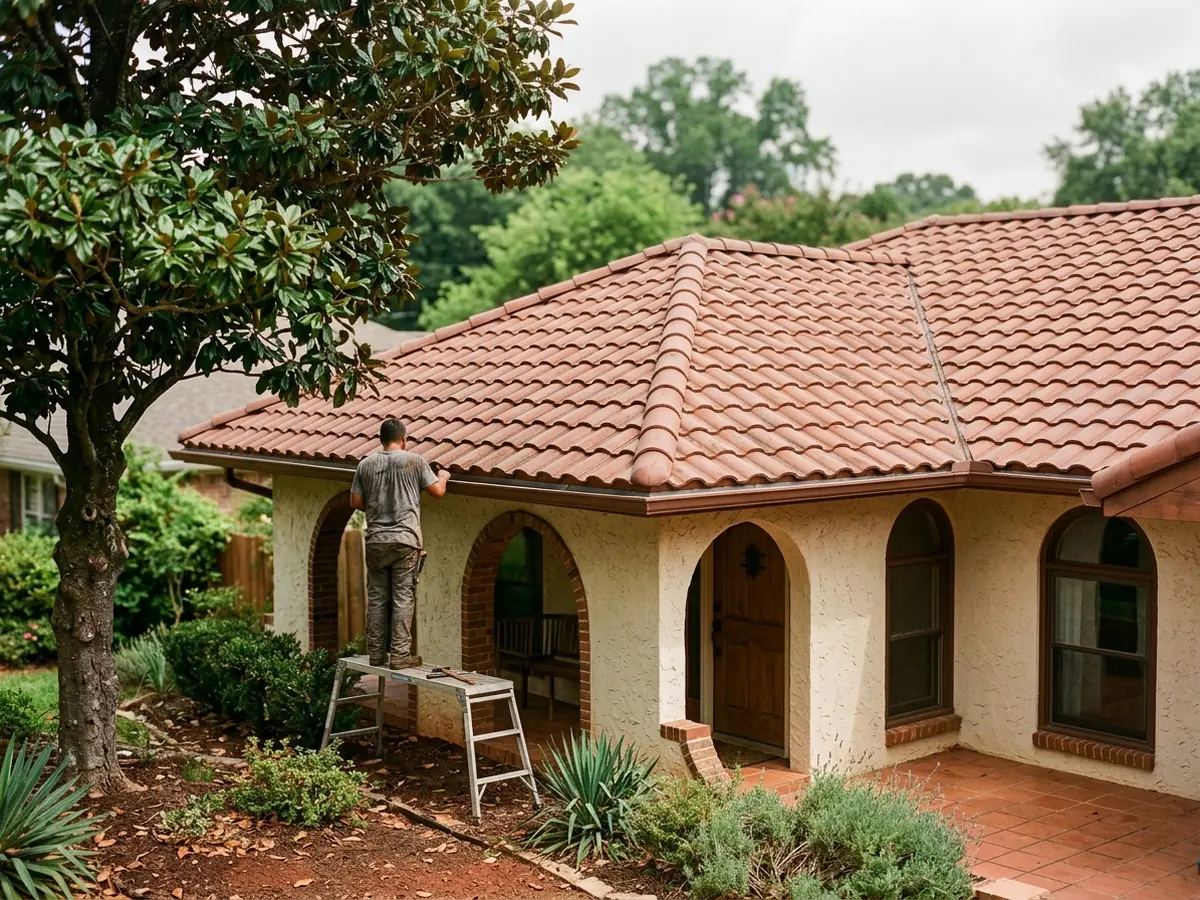
Barrel and Spanish Tile-Style Metal Panels
Tile-style metal comes as wider pressed panels shaped into rows of rounded barrels or S-curves, in terracotta, clay red or sand colors. It gives a Mediterranean or Spanish-revival house the tile profile in metal. Hips and ridges get matching rounded caps. There are fewer, bigger pieces to set than with a shingle pattern, but the cut work at hips still takes time.
Steel Shingles Versus Aluminum Shingles
HomeGuide's national figures put steel shingles at $6 to $13 per square foot installed and aluminum at $6.70 to $16. Steel resists dents better. Aluminum doesn't rust, but HomeGuide notes that it dents more easily and expands and contracts more with temperature. The 2018 code sets a minimum thickness of 0.019 inch for pressformed aluminum shingles. For an inland house that takes hail, steel usually makes more sense. Aluminum earns its premium mostly where corrosion is the bigger worry.
Why Jackson homeowners call Jackson Metal Roofing Pros
- One independent metal roofer gets your request, not a call list
- A free measure, deck check and written estimate
- Ask for panel system, gauge and paint finish in writing
- The roofing permit is part of the scope: ask who pulls it
- No charge to the property owner for the referral
Metal Shingles Price Range and What Raises It
HomeGuide's national range for metal shingles is $6 to $14 per square foot installed, or $9,000 to $35,000 for a 1,500 to 2,500 square foot roof. Labor makes up 50% to 60% of that, since every course is hooked in by hand. No source publishes a Jackson price, so the written estimate is what counts.
Pattern and color
Decorative patterns, two-tone and specialty colors cost more than standard ones.Gauge
HomeGuide calls 29-gauge the thinnest and cheapest and says it is unsuitable where hail is frequent.Roof shape
Steeper than 6:12 means more safety gear and slower work. Every valley, dormer and wall needs custom-bent trim.Deck work
Spaced board sheathing has to be covered or replaced first.
Metal Shingles on Older Jackson Roofs: Deck, Valleys and Fire Rating
On an older house, a few code details decide whether a shingle roof stays dry.
Deck
The 2018 code wants a solid or closely fitted deck unless the shingle is made for spaced sheathing. How old Jackson's housing is, and so how many original decks are still up there, is covered on the metal roof replacement page.Slope
Metal shingles have a higher minimum slope than standing seam, so a shallow porch may need a different roof. The numbers are on the low slope metal roof page.Valleys
Metal-shingle valleys need flashing at least 8 inches each side of center, a splash-diverter rib at least 3/4 inch tall and a 36-inch strip of underlayment under it.Fire rating
Under R902.1 of the 2018 code, metal shingles on a noncombustible deck count as Class A. On a wood deck, the class comes from the product's UL 790 or ASTM E108 test, so ask for the listing.
Metal Shingles in Hail, Wind and Pine Straw
Hail is the main test of a stamped shingle. Expect a dent to show more on a flat slate face than on a deeply embossed shake. Ask whether the exact product holds a UL 2218 rating, and which class. What each class means sits with the FORTIFIED roof notes; how often hail has hit Hinds County is covered under metal roof hail damage. For wind, the interlock along each edge is what holds. Ask how the starter course is locked at the eave and how the rake edges are capped.
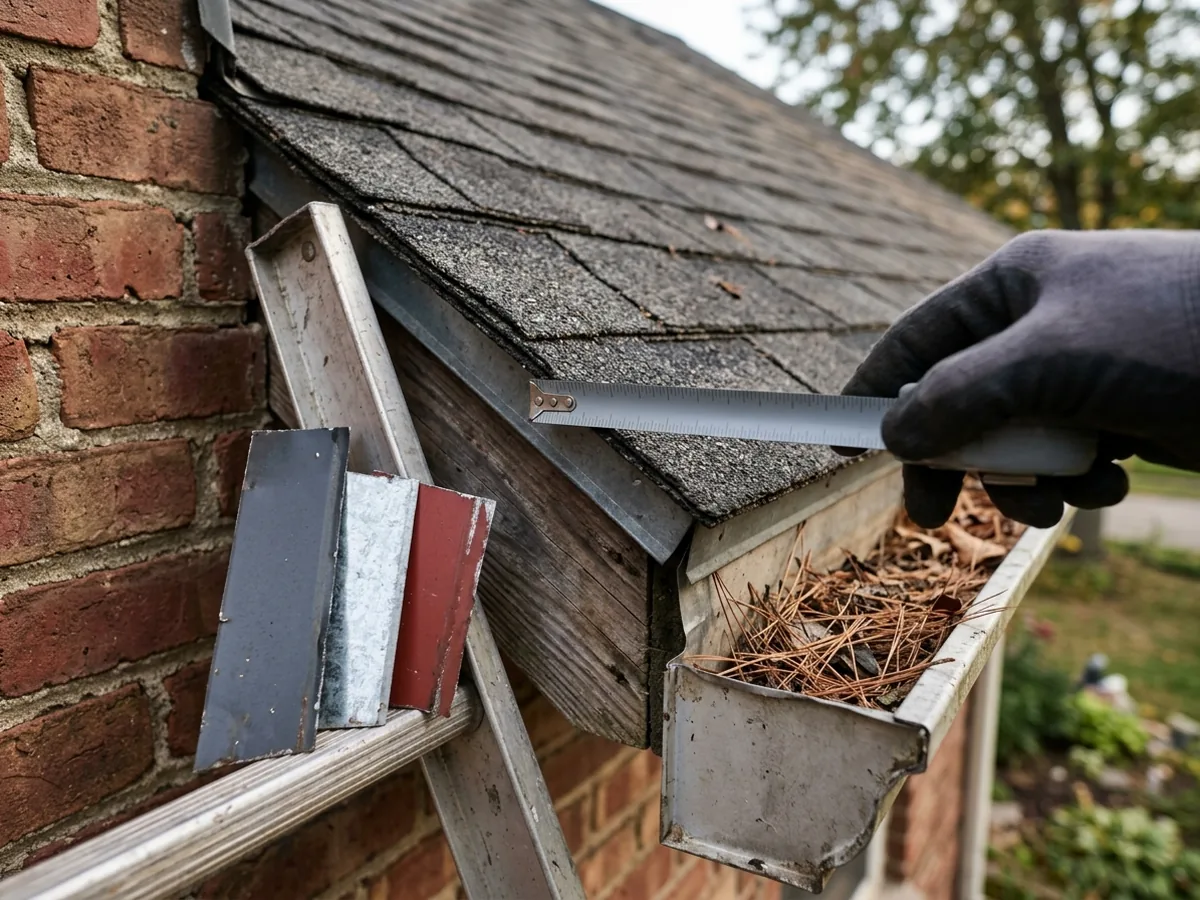
Upkeep is mostly about debris. Interlocking edges and the small steps between courses can catch pine needles that would slide off smooth panels. A cleanout of the valleys and the uphill side of chimneys each fall keeps water moving. Ask the roofer how the finished roof should be walked, and pass that on to satellite and HVAC crews.