
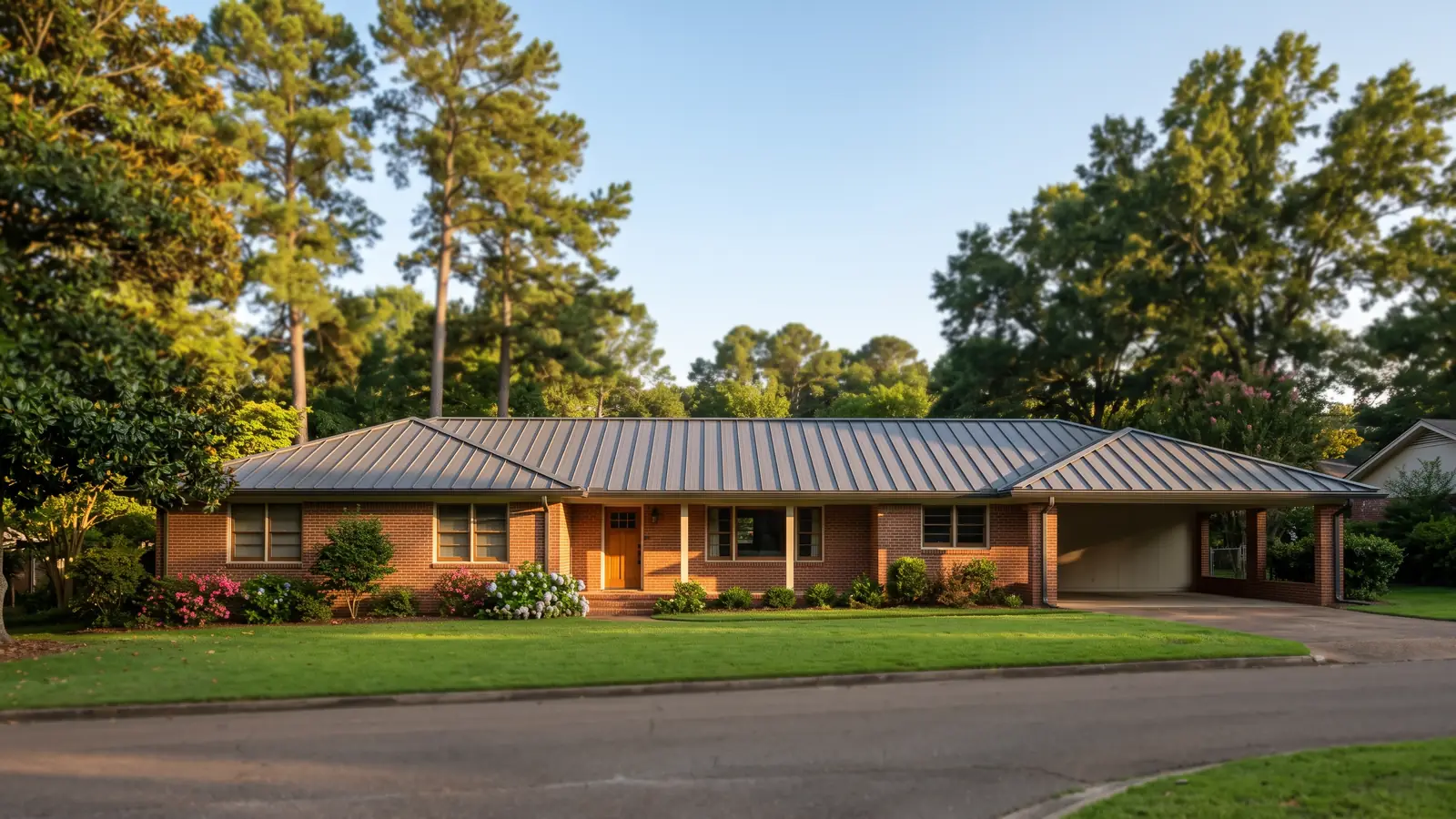
Corrugated Metal Roofing Panel Families and Fastening
Exposed-fastener roofing covers three common profiles. Each one has its own rib height, coverage width and ideal building. Then there are two choices that apply to all of them: the screws, and whether the steel is painted. Get the profile name on paper, because trim and closures are made to fit one rib shape only.
Round-Wave Corrugated Sheets
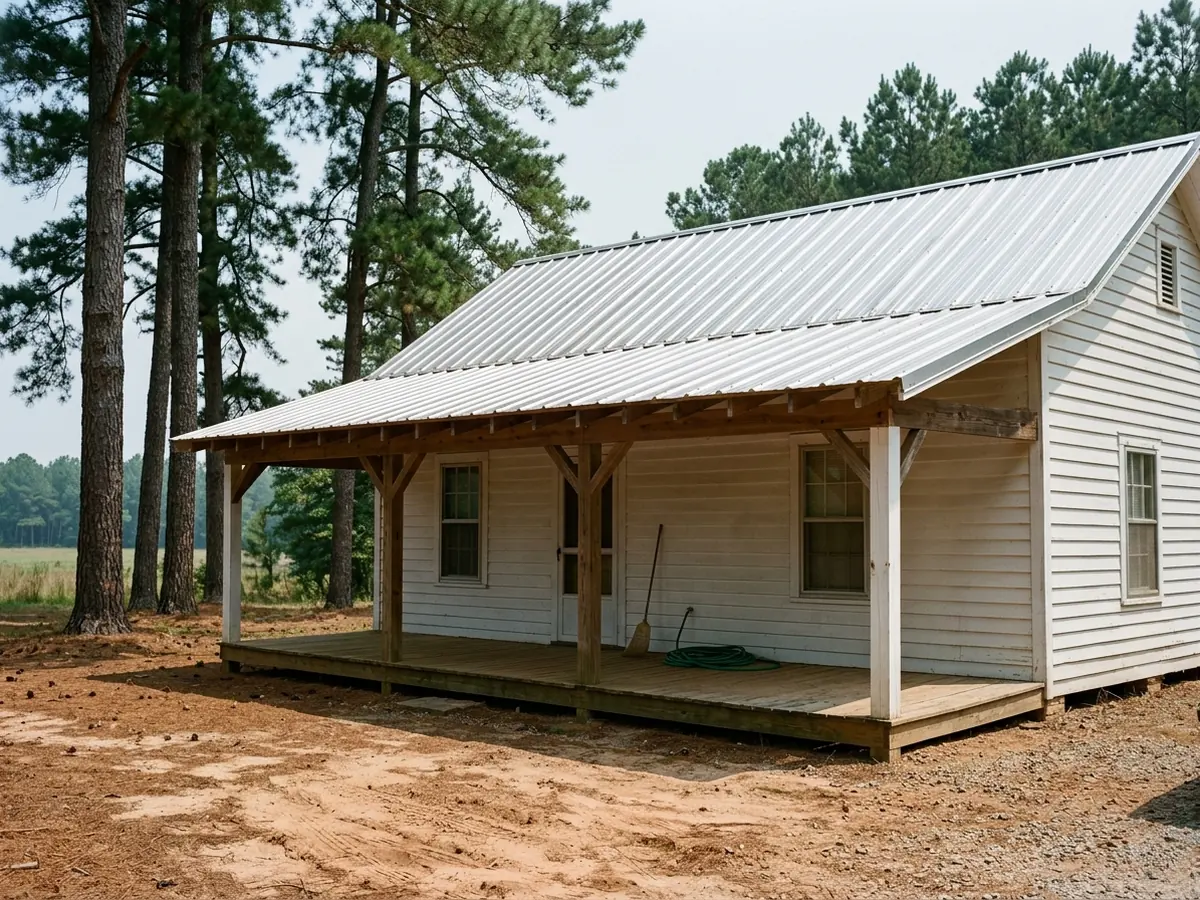
This is the original profile: a smooth, continuous wave from edge to edge, with no flat pan. HomeGuide lists corrugated sheets in 8-, 10- and 12-foot lengths and 24 to 39 inches wide, with each sheet overlapping the next by several inches. It suits porches, sheds and houses meant to look old. Ask the roofer to space the supports from the panel maker's span chart for that exact sheet and gauge.
R-Panel and PBR, the 36-Inch Ribbed Sheet
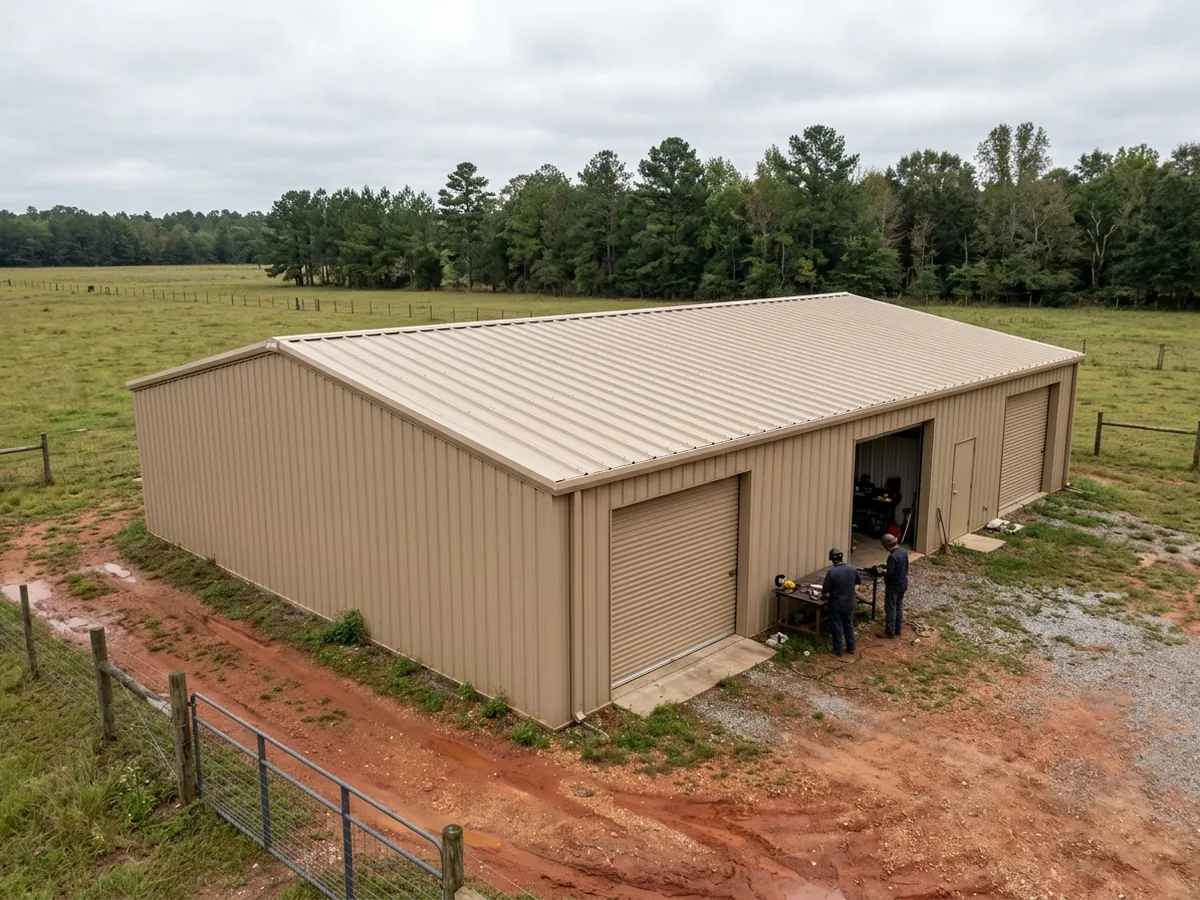
R-panel has tall, square-shouldered ribs with wide flats between them. On MBCI's PBR panel, the ribs are 1¼ inches high on 12-inch centers, each sheet covers 36 inches, and lengths run from 5 to 50 feet, with 26-gauge standard. PBR stands for purlin bearing rib. Gibraltar describes it as a deep-rib panel for industrial, commercial and farm buildings that spans farther between supports. That's why it's the default on shops, pole barns and metal buildings. MBCI lists a 1/2:12 minimum slope, but that assumes sealed laps. The code minimums for lapped panels with and without sealant are on the low slope metal roof page.
5-V Crimp on Farmhouses and Porches
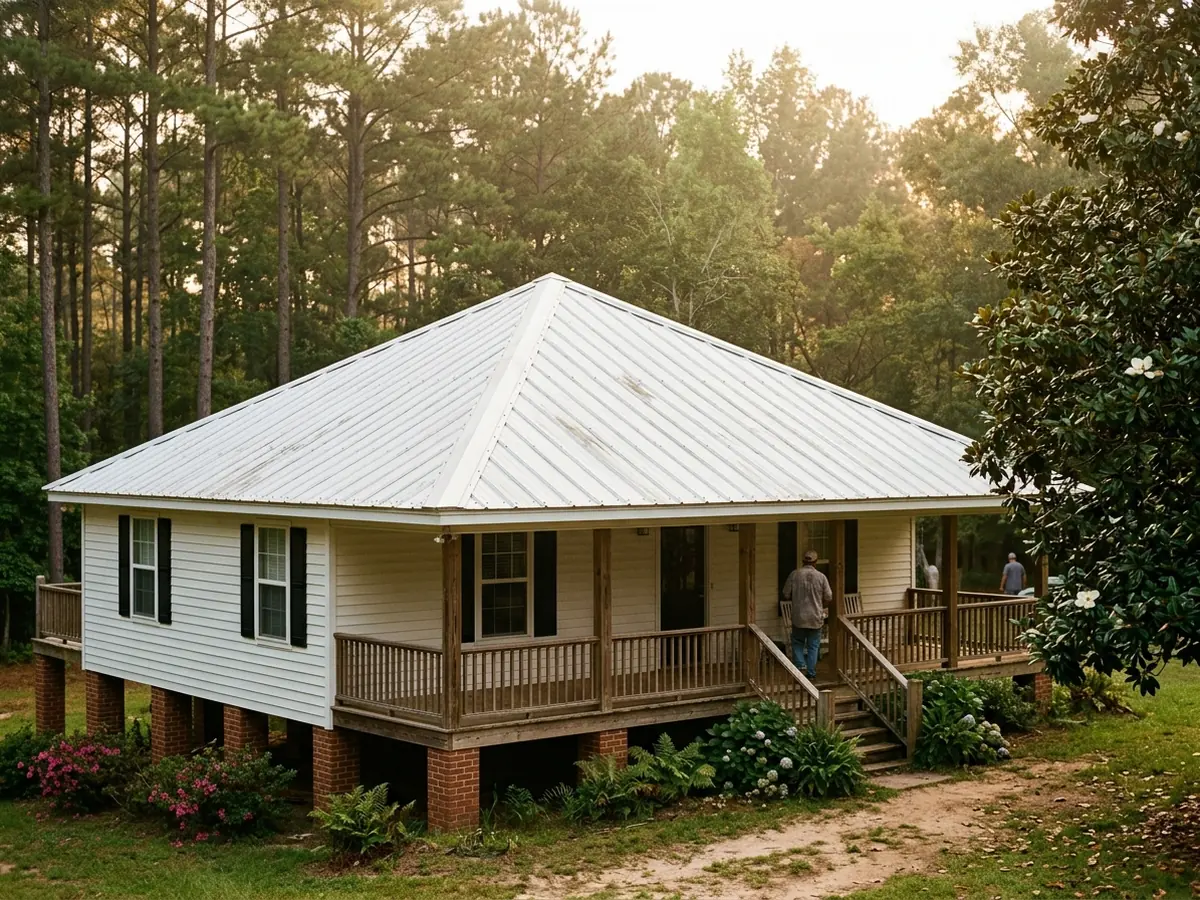
5-V crimp has five low V-shaped ribs per sheet with flat pans between them. MBCI's 5-V is 24 inches wide when laid, with 1/2-inch ribs, 29-gauge standard and 26-gauge optional, and a 3:12 minimum slope. It looks flatter and plainer than R-panel from the street, which is why it suits raised cottages, farmhouses and porches. Hold to that 3:12 floor. A shallower porch should get a different panel.
Screws, Washers and Purlin Spacing
The screw has to suit the panel coating as well as the framing it goes into. The Metal Construction Association's rule is that a fastener should resist corrosion at least as well as the material it's fastened into. That's why coated and stainless-head screws show up on careful quotes for painted and bare steel alike. The Metal Construction Association's compatibility table rules out zinc-plated screws and hot-dip galvanized nails on unpainted Galvalume. Every screw should seat its washer flat and snug. A good roofer won't overdrive a screw so the washer squashes out the sides, or underdrive it so there's a gap. Purlin spacing comes from the panel maker's span tables for the gauge and wind load, and the screw pattern is tighter at the eaves, rakes and corners.
Bare Galvalume or Painted Sheet
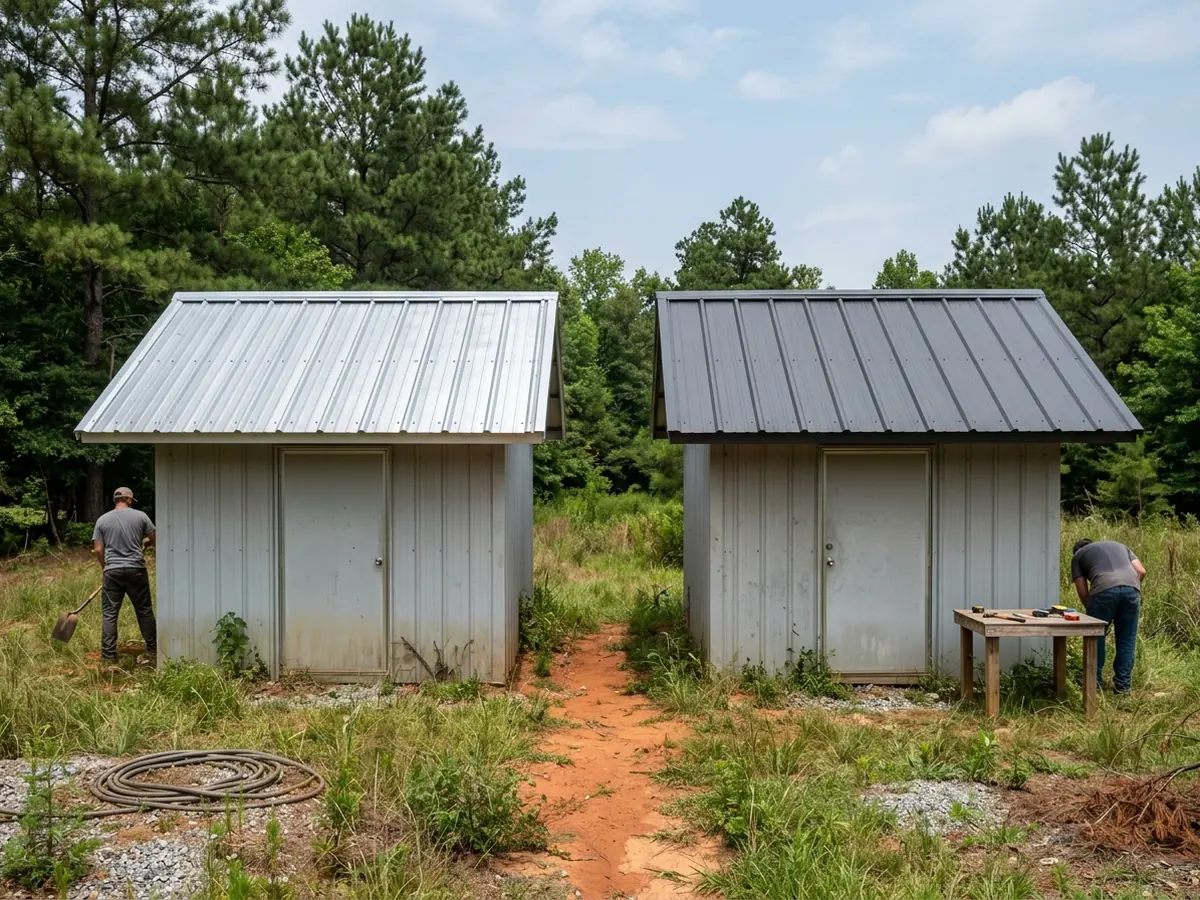
Bare Galvalume is silver and among the cheapest metal roofing materials, according to HomeGuide. Painted sheet costs more and comes in colors that suit a house. HomeGuide notes that unpainted 29-gauge panels are used on barns and outbuildings but aren't recommended for homes. The coating weights, gauge choices and paint systems are compared on the Galvalume metal roof page.
Why Jackson homeowners call Jackson Metal Roofing Pros
- One independent metal roofer gets your request, not a call list
- A free measure, deck check and written estimate
- Ask for panel system, gauge and paint finish in writing
- The roofing permit is part of the scope: ask who pulls it
- No charge to the property owner for the referral
Corrugated Metal Roofing Cost Compared With Other Metal
HomeGuide's national figures put corrugated at $5 to $12 per square foot installed, or $6,000 to $22,000 for an average job. That's the low end of metal roofing. Standing seam runs $9 to $16 on the same guide. Labor alone is $4 to $7 per square foot, and HomeGuide puts Galvalume corrugated at $5 to $10 installed. These are national numbers, not Jackson quotes. A written estimate that's worth comparing will list:
Profile and gauge
Corrugated, R-panel or 5-V, and the gauge for each section of roof.Coating
Bare Galvalume, or painted, with the paint system named.Fasteners
The screw type, its coating, and its length into wood or steel.Supports
New purlins, an existing deck, or furring over old shingles. Whether furring over shingles is allowed depends on the code's one-layer limit; see metal roof over shingles.Trim and closures
Ridge, eave and rake trim, plus the foam closures that fill the ribs at the eave and ridge.
Corrugated Metal Roofing Life in Jackson Heat and Humidity
HomeGuide gives corrugated roofs 30 to 45 years on average. SFS, which makes fasteners and clips, puts through-fastened roofs at 20 to 30 years. The gap mostly comes down to the screws. Fixr notes that steel panels expand and contract, which loosens fasteners and opens gaps that turn into leaks if they're ignored. Through a long Jackson summer, that movement repeats every hot day.
Most of the upkeep is the screws. Every few years, look over the fastener rows for raised heads, cracked washers and rust trails. Once enough washers have failed, the whole roof gets re-screwed. That job and its national price are covered on the metal roof repair page.
Condensation is the other risk. Warm, wet air under cool steel leaves water dripping off the underside of panels on open framing. On a house, a solid deck with underlayment handles it. On shops and barns, ask about a drip-stop membrane bonded to the underside of the panel. Barn details are on the barn metal roofing page.